
Prevention as an Asset Class
Make Prevention Investable
EDEN makes the breakeven boundary visible—so founders, payers, and investors know whether to commit or redesign.
Digital Diabetes Screening, Switzerland
- -Reach: Detection 2-3 years earlier reduces intervention cost
- -Report: Outcomes visible before payer budget cycles reset
- -Reimburse: Breakeven Year 4—inside 3-7 year investor horizons
In collaboration with


The Pillars of Future Healthcare
4P Medicine shifts reactive care into proactive care. EDEN calculates when those shifts meet realistic thresholds for payers, founders, and investors.
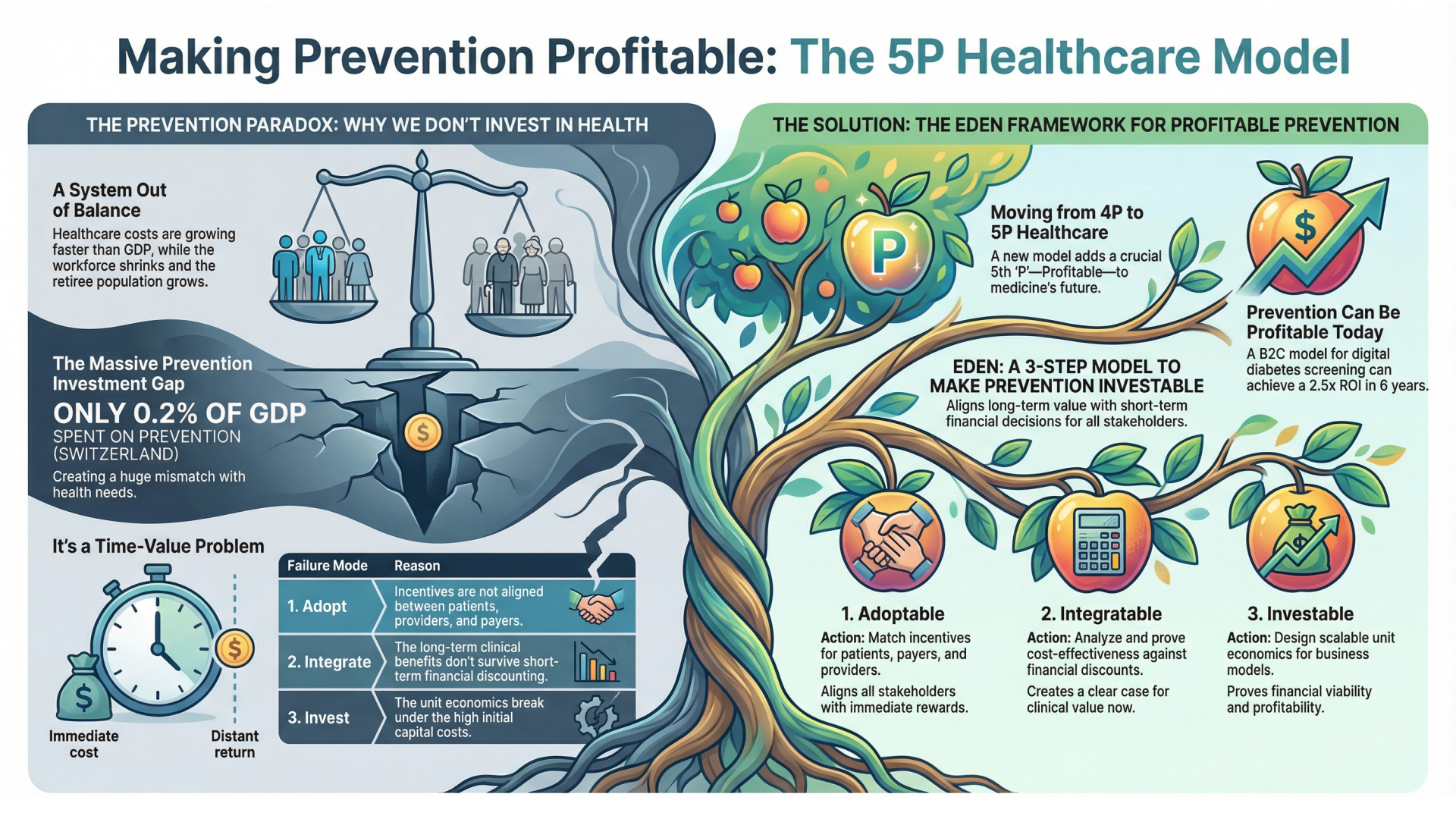
Four Timelines That Determine Breakeven
Operational inefficiency signals that breakeven will arrive too late. Four timelines determine whether prevention reaches breakeven early enough for payers to commit, founders to build, and investors to finance.
When can we detect risk and intervene before costs compound?
How long must users stay engaged before outcomes appear?
When can we show evidence before payer budgets reset?
When does breakeven appear relative to investor exit horizons?
When can we detect risk and intervene before costs compound?
How long must users stay engaged before outcomes appear?
When can we show evidence before payer budgets reset?
When does breakeven appear relative to investor exit horizons?
Prevention Market Map
Five recurring patterns where breakeven happens early enough for payers to commit, founders to build, and investors to finance.
| Company | Description | Investors | Deal | Year | EDEN Insight |
|---|---|---|---|---|---|
| Omada Health | Digital pre-diabetes reversal | Cigna Ventures, a16z, Kaiser Permanente Ventures | $50M | 2022 | Model ROI < 5 yrs for CGM + coaching |
| Hinge Health | MSK programs, 2yr payback | Tiger Global, Coatue, Insight Partners | $600M | 2022 | Quantify avoided ER/surgery costs |
| Virta Health | Self-insured corporates | Sequoia, Venrock, Cigna Ventures | $65M | 2022 | Target stable workforce contracts |
| Company | Description | Investors | Deal | Year | EDEN Insight |
|---|---|---|---|---|---|
| Aledade | Physician ACO network | Venrock, OMERS Growth, Meritech | $260M | 2023 | Savings-share ROI modeling |
| Doctor Anywhere | Primary-care DHTs (Singapore) | Novo Holdings, Asia Partners | $88M | 2022 | Prevention ROI in capitated systems |
| Oviva | Digital nutrition (EU) | Temasek, Sofina, MTIP | $80M | 2022 | National reimbursement frameworks |
| Company | Description | Investors | Deal | Year | EDEN Insight |
|---|---|---|---|---|---|
| CVS Health + Aetna | Pharmacy + payer merger | Merger | $69B | 2018 | Synergy ROI in integrated care |
| Cityblock Health | Medicaid super-utilizers | Alphabet GV, Emerson, Tiger Global | $400M | 2021 | ROI in underserved markets |
| Propeller Health | COPD monitoring | Acquired by ResMed | $225M | 2018 | Hospital-avoidance value capture |
| Company | Description | Investors | Deal | Year | EDEN Insight |
|---|---|---|---|---|---|
| Levels Health | Consumer CGM | a16z, General Catalyst | $44M | 2023 | CGM data to short-term ROI |
| Biofourmis | Predictive analytics | SoftBank Vision Fund 2 | $300M | 2022 | 90-day risk scores to contracts |
| Huma | Voice/gait monitoring | Leaps by Bayer, SoftBank, Sony | $130M | 2022 | Outcome-based payments via RWD |
| Toku Eyes | AI retinal screening | Icehouse Ventures, NZ Gov Fund | $8M | 2023 | Diagnostic AI in preventive contracts |
| Company | Description | Investors | Deal | Year | EDEN Insight |
|---|---|---|---|---|---|
| Ro | Sexual health, weight loss | General Catalyst, FirstMark | $150M | 2021 | DTC pricing for cash flows |
| Hims & Hers | Hair loss, sexual wellness | Forerunner, Redpoint, IVP | $200M | 2021 | Low-friction consumer model |
| Headspace Health | Mental health (merger) | Blackstone Growth, KKR | $3B | 2021 | B2B2C employer programs |
| Lyra Health | Employer-paid therapy | Accel, Dragoneer | $235M | 2023 | Employer WTP and retention ROI |
| Altoida | Digital cognition biomarkers | M Ventures (Merck), Evidation | $20M | 2022 | Preventive ROI in neurodegeneration |
EDEN calculates which interventions reach breakeven in under 5 years, under which payment structures, with which integration strategies—making breakeven timelines visible so you know whether to commit, redesign, or reallocate.
EDEN: Your Breakeven Calculator
Three modules that answer: When does prevention reach breakeven? How confident can you be in that estimate?
Why Breakeven Is Blocked
System-fit constraints: payer discounting, provider friction, patient time preferences. Explains why breakeven is delayed or unreachable.
Diagnoses Reach and Retain barriers to breakeven.
When Evidence Appears
Clinical pathways translated into outcome timelines and system-adjusted QALYs. Shows when evidence materializes relative to breakeven.
Maps Report timing relative to payer budget cycles.
Where Breakeven Sits
ROI timelines under real discounting and uncertainty. Calculates breakeven year, valuation curves, and confidence intervals.
Determines Reimburse timing relative to investor horizons.
Find Breakeven Before the Market Does
Weekly signals on prevention investments where breakeven timelines align. Transparent models. Auditable assumptions.
How It Works
EDEN leverages unstructured real-world data to computationally reveal which prevention models create measurable returns—and why.
From raw data to investment-ready signals
- OECD, World Bank & WHO – macroeconomic and population metrics
- PitchBook & Crunchbase – venture funding intelligence
- PubMed – scientific and clinical studies
- FDA Database – regulatory approvals
- IP Databases (USPTO, Espacenet) – early technology signals
- Hospital Statistics – national healthcare and cost data
- HTA Databases (Swiss HTA, NICE) – reimbursement benchmarks
Digital Diabetes Screening, Switzerland
When does this intervention reach breakeven—and how confident can we be in that estimate?
Breakeven Timeline
Reach
Digital biomarkers cut diagnostic delay 2-3 years, reducing intervention cost.
Retain
Tailored nudges sustain engagement long enough for metabolic outcomes to appear.
Report
Glucose improvements visible before payer budget cycles reset.
Reimburse
Breakeven Year 4 fits inside 3-7 year investor exit horizons.
Decision
Can a consumer diabetes app work as an investment in Switzerland? Yes, when breakeven occurs Year 4.
Competitive moat: Regulatory and clinical barriers keep competitors out. Pure software cannot replicate the clearances and evidence required for payer contracts.
Moat Duration
Different prevention investments have different competitive windows:
Short
Examples: Wellness apps, meditation apps
Easy to copy. Pure software. No lasting advantage.
Medium
Examples: Glucose monitors, AI diagnostics with proprietary data
Requires hardware, regulatory approval, or clinical proof.
This case fits here
Long
Examples: Integrated health systems, employer clinics
Structural positions. Not typical investment targets.
Breakeven Calculation
Why Breakeven Is Blocked (or Not)
Accelerates Breakeven
Consumer willingness to pay. Proven technology. Measurable outcomes.
Delays Breakeven
Insurance reimbursement unclear. Weak policy support. Hospital integration friction.
When Evidence Appears
Early adopters pay out of pocket. Scale requires employer or insurer contracts. Evidence must materialize before payer budget cycles reset.
Where Breakeven Sits
Breakeven Year 4 at 18,446 users (under 0.5% of Swiss adults). At 30,000 users by Year 6, valuation CHF 0.94-3.2M under varying risk tolerance.
Long-term success requires B2B insurer contracts to sustain retention and reach breakeven.
Breakeven Metrics
| Metric | Value | Breakeven Impact |
|---|---|---|
| Breakeven Year | Year 4 | Inside investor exit horizons |
| Required Market Share | Under 0.5% | Achievable penetration |
| Valuation at 30k Users | CHF 0.94-3.2M | Reflects discounting uncertainty |
| Scale Strategy | B2B | Insurer contracts sustain Retain |
Market Context
Market Size 2030
15-20% annual growth
EDEN Filter Accuracy
Screens misaligned timelines
Lead Time
Before market consensus
Sample breakeven outputs (2024 data). Not investment advice.
Why It Works
Peer-reviewed methods translating health innovation into investment decisions
Every paper summary includes actionable insights for investors, payers, and founders—no academic jargon
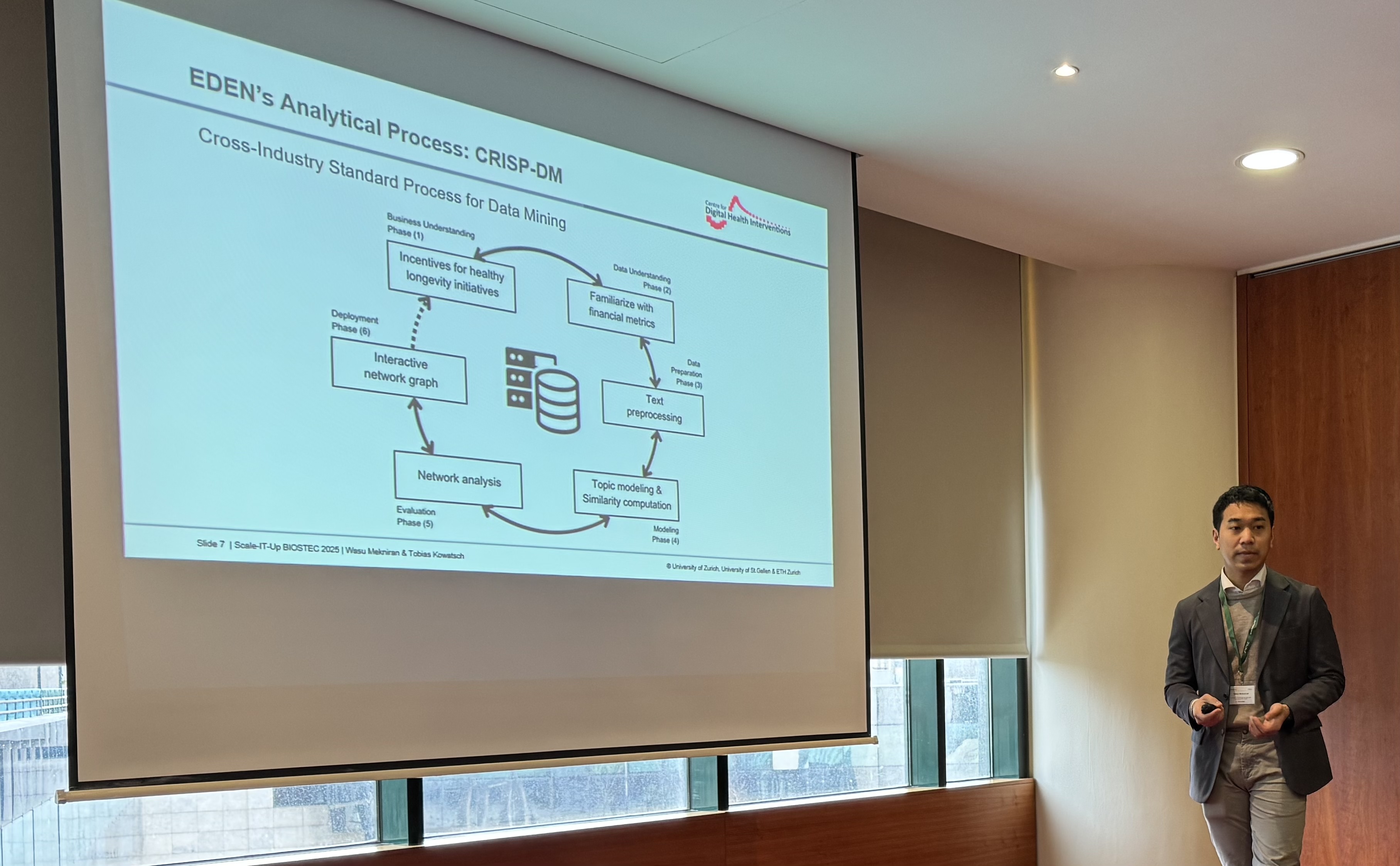
Wasu Mekniran, Tobias Kowatsch
Biomedical Engineering Conference - Portugal
💡 Investor takeaway:Unstructed data can be harvested for early systemic insights.
What This Unlocks
Investors:
Demonstrates scalable AI approach to market analysis and stakeholder mapping for prevention ventures
Payers:
Provides framework for identifying aligned partners in prevention ecosystem
Founders:
Offers methodology to map competitive landscape and identify strategic partners

Wasu Mekniran
💡 Investor takeaway:Use EDEN's thresholds instead of biotech heuristics to avoid overpaying for DHT optionality.
What This Unlocks
Investors:
Reveals why DHT investments require different evaluation criteria than traditional biotech
Payers:
Explains structural challenges in DHT reimbursement compared to pharmaceutical products
Founders:
Identifies four strategic positioning options for DHT competitive advantage

Wasu Mekniran, Lukasz Paciorkowski, Iwona Cymerman, Rafal Pawlowski
4th Swiss-Polish Economic and Technology Forum
💡 Investor takeaway:AI-first development reduces costs by 70%—prioritize companies with AI infrastructure.
What This Unlocks
Investors:
Quantifies cost savings and efficiency gains from AI adoption in drug development
Payers:
Shows potential for lower drug costs through AI-enabled development efficiency
Founders:
Demonstrates competitive advantage of AI-first development approach
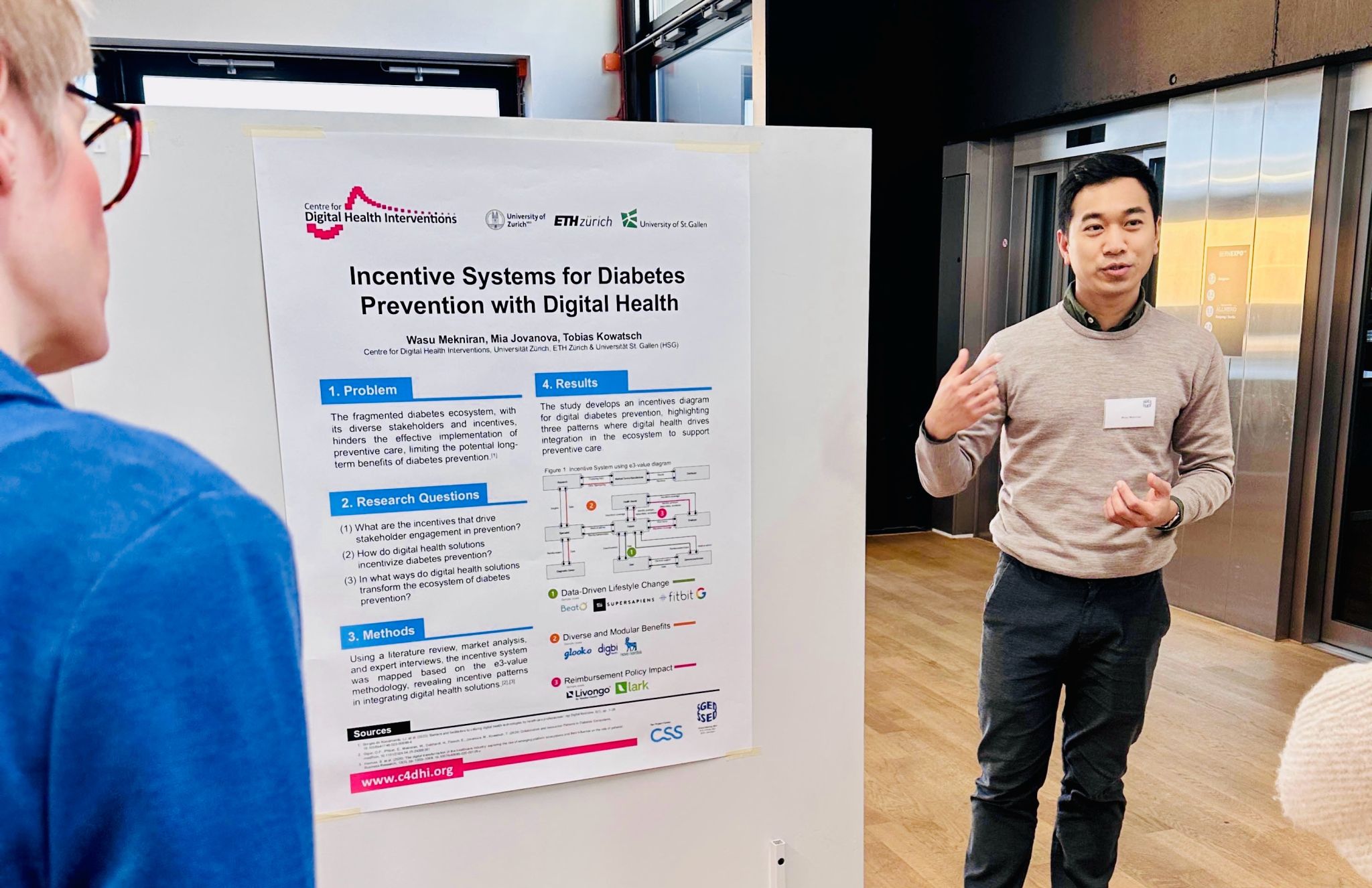
Wasu Mekniran, Mia Jovanova, Tobias Kowatsch
Swiss Society of Endocrinology and Diabetes 2024
💡 Investor takeaway:Three contract models identified—target data-driven lifestyle change for fastest ROI.
What This Unlocks
Investors:
Maps value flows and revenue opportunities in diabetes prevention ecosystem
Payers:
Identifies three contract models for diabetes prevention reimbursement
Founders:
Reveals critical partnerships needed to align incentives for market entry

Wasu Mekniran, Jan-Niklas Kramer, Tobias Kowatsch
Biomedical Engineering Conference - Italy
💡 Investor takeaway:NCDs and stigmatized conditions have highest payer appeal—prioritize these segments.
What This Unlocks
Investors:
Reveals insurer decision criteria and three strategic pathways for DHT partnerships
Payers:
Outlines three business model options for insurers entering prevention market
Founders:
Identifies which DHT categories have highest payer appeal and why
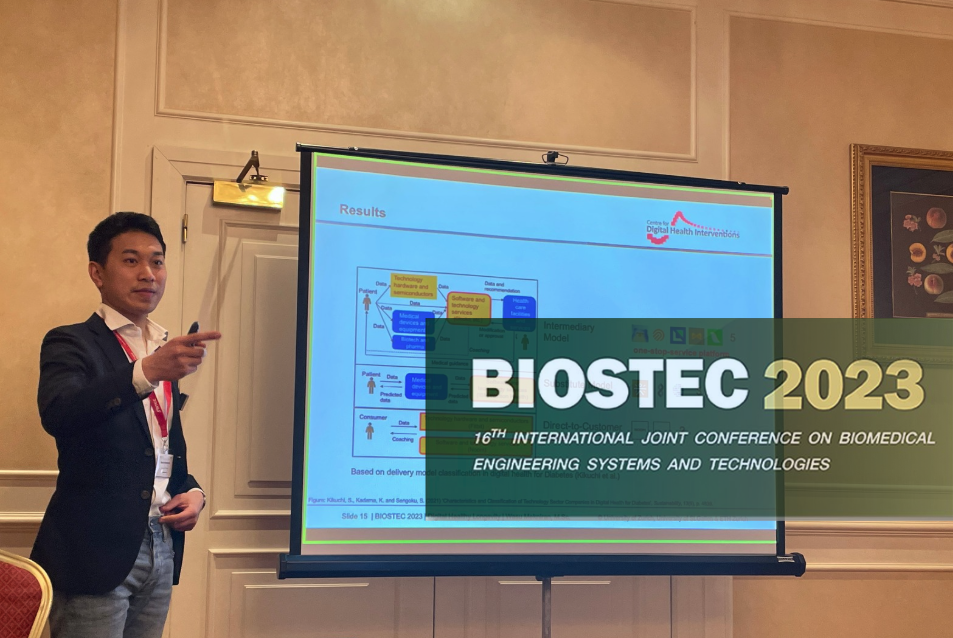
Wasu Mekniran, Tobias Kowatsch
Biomedical Engineering Conference - Portugal
💡 Investor takeaway:B2B2C models outperform D2C—prioritize employer partnerships for scale.
What This Unlocks
Investors:
Identifies proven business model patterns from $1.73B in successful DHT funding
Payers:
Shows why B2B2C models outperform direct-to-consumer in prevention
Founders:
Provides blueprint for scalable business model design in longevity space
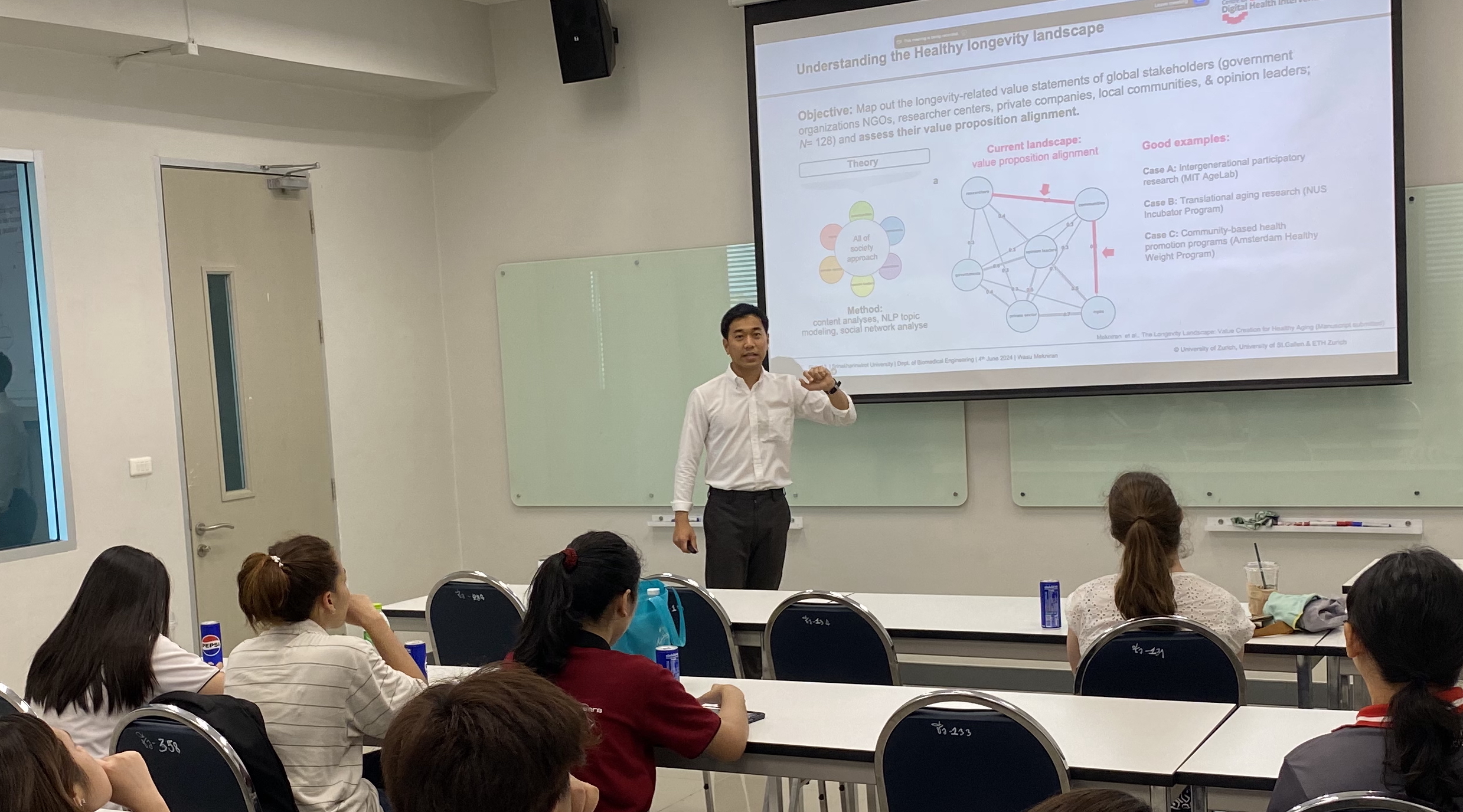
Wasu Mekniran, Odile-Florence Giger, Elgar Fleisch, Tobias Kowatsch, Mia Jovanova
SWU Biomedical Engineering Dept.
💡 Investor takeaway:Five strategies to bridge academic-community gap—target underserved niches for market entry.
What This Unlocks
Investors:
Maps global longevity ecosystem to identify underserved niches and partnership opportunities
Payers:
Reveals alignment gaps between research and community needs for prevention programs
Founders:
Identifies five strategies to bridge academic-community gap for market validation

Wasu Mekniran, Research Team
NUS Healthy Longevity Academy
💡 Investor takeaway:Consumer WTP data coming Q3 2025—early insights available on request.
What This Unlocks
Investors:
Will reveal consumer willingness to pay for longevity interventions
Payers:
Will show population health priorities for prevention program design
Founders:
Will identify consumer segments most receptive to longevity products
Make Better Decisions
EDEN tells you when prevention reaches breakeven—and how confident you can be in that estimate—so you know whether to commit, redesign, or reallocate.

Wasu Mekniran M.Sc. MBA
Researcher, ETH Zurich & HSG | Healthcare Financing & Digital Health
We build the analytical infrastructure to calculate when prevention reaches breakeven. We combine health economics with financial modeling to answer: When? And how confident can you be?
"Prevention fails when breakeven comes too late."
System fit + evidence timing + financial modeling = breakeven visibility for payers, founders, and investors.
Ready to calculate breakeven for your next prevention investment?